What order should you set up a campsite in?
Check in and inspect the designated site first, then establish the sleeping area before optional comforts. Set up the kitchen according to campground rules and keep essentials accessible. Before leaving, pack equipment in a planned order, follow waste instructions and walk the site for forgotten items.
The first half hour at a campsite can feel busy because everything arrives at once: luggage, hungry children, unfamiliar equipment, and the need to find the bathroom. A simple order of operations helps. Do the jobs that make the site safe and the night workable first, then add the comfortable extras.
This sequence is intended for a designated family car-camping site. Follow the campground's own rules, staff instructions, and equipment manuals whenever they are more specific. It is not a guide to choosing an improvised site in the backcountry.
What should you do before unloading the car?
Confirm the site number, checkout time, and any current instructions. Locate the restrooms, water supply, waste facilities, and any required food-storage equipment. Ask about an unclear rule before setting up around an assumption. Keep the reservation information accessible until the site is confirmed.
If children are with you, assign an adult to supervise them while another handles arrival tasks. Show everyone where the site's boundaries are and where vehicles move. Keep essential supplies in the car until you have looked around rather than unloading everything into a space you may need to rearrange.
2. Inspect the designated area
Look at the ground, overhead branches, nearby hazards, and the available tent surface. Do not pitch under an obvious hazard or move outside the permitted area to find a prettier spot. If something concerns you, contact campground staff about a suitable solution.
The NPS campsite guide advises avoiding falling-tree hazards and places vulnerable to flooding, and keeping tents clear of fire and cooking areas. Use the local site's layout and regulations to decide the actual arrangement rather than applying a universal diagram to every campground.
3. Make the sleeping area ready
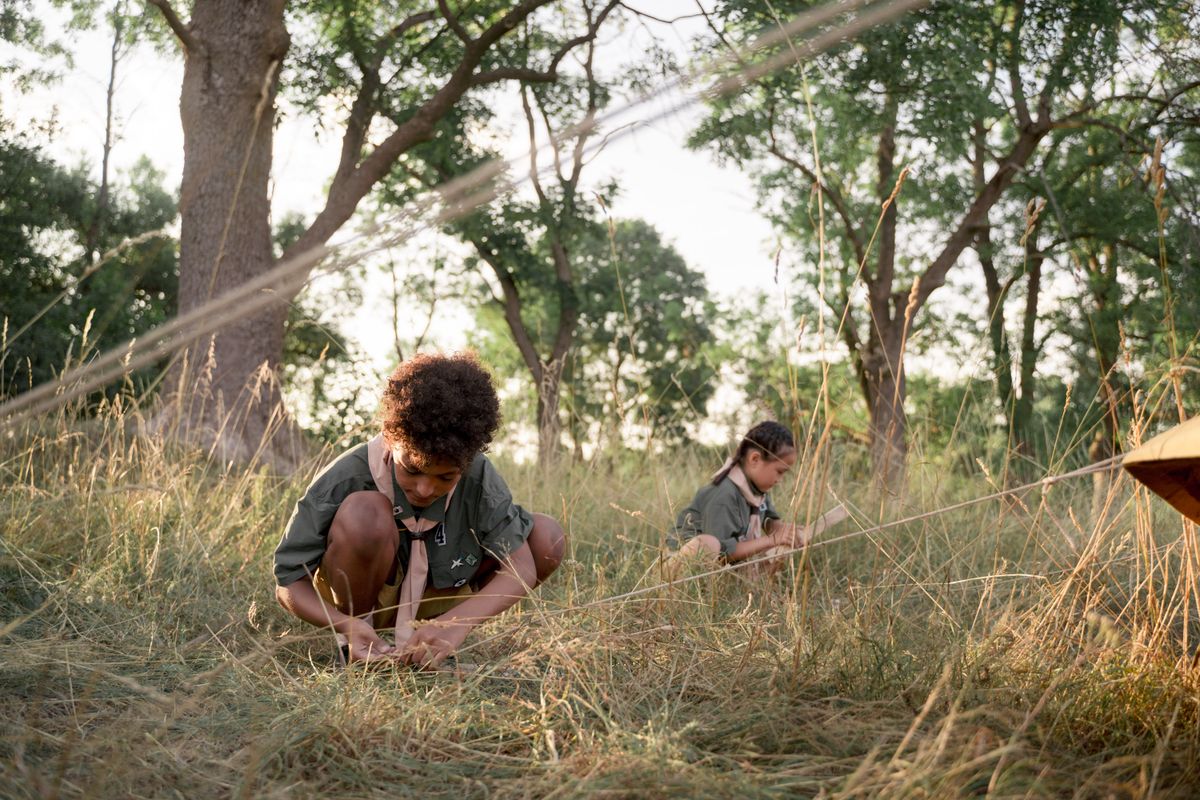
Place the tent on the permitted surface and set it up according to its instructions, including the rainfly and required guylines. Keep lines out of normal walking routes where the layout allows, and make everyone aware of them. Put the bags and pads inside only when the shelter is ready to protect them.
Inflate pads, arrange bedding, and identify where lights and nighttime clothing will go. This is a valuable job to finish before dinner. A ready bed is much more useful to a tired family than perfectly arranged chairs beside an unpacked tent.
4. Establish a workable kitchen
Choose an appropriate outdoor cooking position that meets the equipment instructions and campground rules. Keep cooking separate from play and routine foot traffic. Put water and handwashing supplies where they can be used conveniently, then keep the remaining food in the required secure storage.
Do not assume that a cooler is wildlife-proof or that your vehicle is always the required storage location. Different destinations have different rules. Read the instructions for this campground and apply them to food, trash, and other regulated scented items. The easiest routine is the one everyone in the family understands.
5. Add comfort without spreading the campsite
Set out chairs and the small items you actually need. Keep bins closed when not in use and leave a clear route between the tent, table, and vehicle. Use the existing site rather than expanding onto plants or creating new paths to the bathroom.
Make one place for shoes, one for clean dishes, and one for waste. Clear categories reduce the repeated question of where something belongs. Avoid hanging equipment in ways that damage trees or violate local rules. If a setup needs extensive modification of the surroundings, rethink the setup.
6. Use a quick evening reset
Before bedtime, wash and put away meal equipment, handle dishwater as directed, secure food and trash, and collect loose items. Check the forecast and prepare lights and dry layers. Follow any applicable fire rules; a campfire is optional, and the evening does not depend on having one. If fires are permitted and you have one, extinguish it completely and ensure the coals are cold before sleeping or leaving. Follow the NPS campfire guidance and local instructions. Never leave a fire unattended.
Keep noise and light considerate of nearby campers. Families have different bedtimes, and a bright lantern pointed at the next tent can be as intrusive as a speaker. A calm reset also means fewer items to search for if you need to leave the tent during the night.
7. Pack down in an order that works
On departure morning, start with nonessential items while keeping breakfast and hygiene supplies accessible. Pack dry equipment when possible. If the tent must go away wet, plan to unpack and dry it promptly at home. Leave cleaning and waste supplies out until the final job is done.
Check the site slowly from several angles. Look for stakes, small wrappers, food scraps, and items under the picnic table. The NPS Leave No Trace guidance emphasizes established surfaces, packing out waste, leaving natural objects in place, and consideration for others. Use the campground's designated disposal facilities correctly; if something cannot be disposed of there, take it with you.
Leave the campsite in the condition you would hope to find it. The final check is not glamorous, but it protects the place, avoids lost equipment, and gives the next family a better start. Save one note about what would make your next setup easier, then head home with a system you can reuse.
Useful next steps
Compare gear essentials before buying, or estimate your weekend costs with our free calculator.